|

|
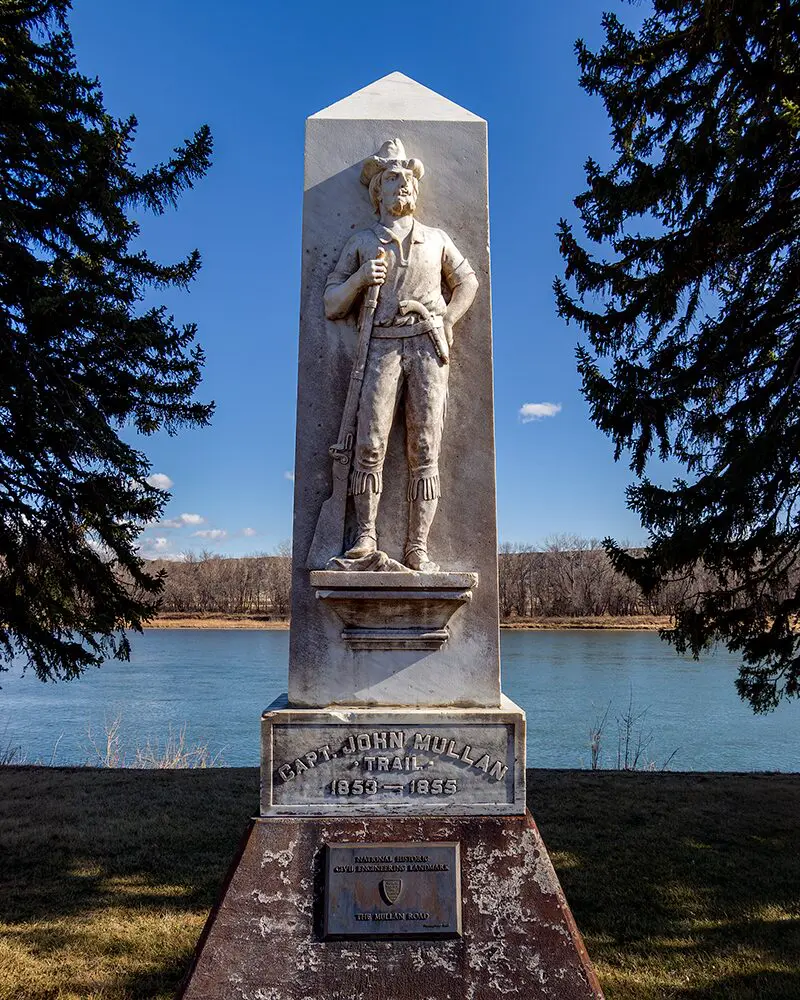
| Welcome to the Eastern Terminus of
the Mullan Road |
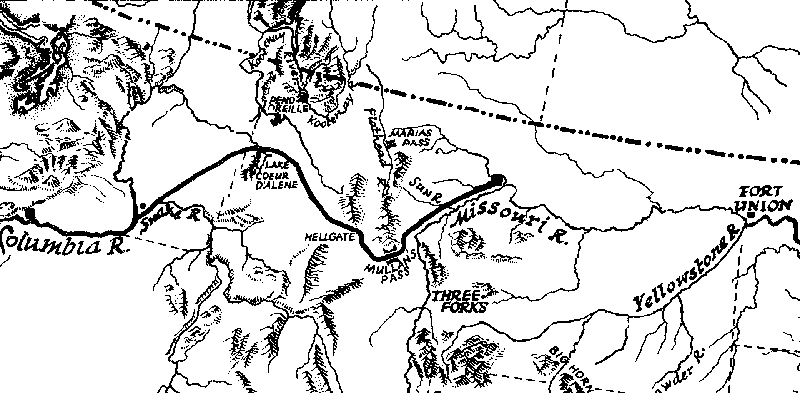
Originating in Fort Benton, Montana, The Mullan Road was the
first wagon road to cross the Rocky Mountains to the Inland of
the Pacific Northwest. It was built by US Army Lieut. John
Mullan between the spring of 1859 and summer 1860. It led from
Fort Benton, Montana, the navigational head of the Missouri
River (and once farthest inland port in the world) to Fort Walla
Walla, Washington Territory, near the Columbia River. The road
approximately followed the path of modern-day Interstate 15 and
Interstate 90 through what are now Montana, Idaho and
Washington.
From the origin at Fort Benton, Montana, the Mullan Road
proceeded: West from Fort Benton, Montana Passing North of Great
Falls, Montana Dropping south to cross the continental divide
west of Helena, Montana (following a path through Mullan Pass,
immediately north of that now traveled by U.S. Route 12) Along
the Clark Fork River, near the ghost town of Bearmouth, Montana
Just west of Garrison, Montana, it joined the route of
present-day Interstate 90 (similar to the U.S. Route 12
transition to join Interstate 90 today) It remained with the
Interstate 90 route as it passed Missoula proceeding west
through Montana. The Mullan Road through the Missoula Valley
fostered rapid growth for the burgeoning city, and allowed the
U.S. Army to establish Fort Missoula there in 1877. The road
then crossed the border into Idaho near Mullan, Idaho (followed
by the later Interstate 90). The highest elevation of the road
is a second Mullan Pass at 5168 feet (1575 m), which lies about
7 miles (10 km) east of Mullan, Idaho on the Idaho-Montana
border. From the middle of the Idaho crossing, the road deviates
from present-day major roads. The Mullan Road went southwesterly
in Idaho to pass south of Lake Coeur d'Alene The road then
passed into Washington some distance south of Spokane,
Washington From there, the Mullan Road passed through the
Palouse country and then the scablands of eastern Washington. It
passed through Benge, Washington. The Benge section of the road
was completed May 22, 1861; the wagon ruts were still visible in
2008 just northeast of town at the site of the First Benge
School. South of Benge, there is a stretch of the former road
still labeled 'Mullan Road'. This gravel section of the Mullan
Road travels southwesterly until it meets Washington State Route
26 near Washtucna, Washington. The portion of Mullan Road south
of SR 26 in Washington, which follows the course of the Palouse
River as it descends to the Snake River, has been reverted to
grazing and is not accessible to the public. After crossing the
Snake River near the confluence with the Palouse River, the
Mullan Road continues south to its terminus at Fort Walla Walla
near Walla Walla, Washington.
|
|